


Teachers, please read these notes about our programs:
One chaperone is mandatory for every ten students for field trips.
All programs are offered year-round.
The maximum number of students for each program is 27.
Tuition assistance is available for Title 1 schools, on a first-come, first-serve basis.
Have questions? Please email kristen@denveraudubon.org or call 720-214-0673.
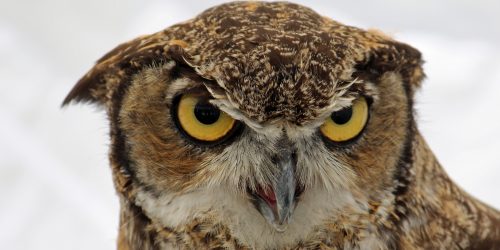
NIGHT NINJAS: OWLS (GRADES K-5)
What superpowers allow owls to hunt so efficiently at night? Students examine the skins (taxidermy) of Great Horned Owls and dissect owl pellets to discover what makes owls similar to ninjas.
Program length: 1 hour per class (up to 27 students)
Program fee: $200 per class for 1st two classes, $150 per class for any additional classes on the same day.
Satisfies Colorado Academic Standards for Science 2.1 and 2.3, and Math 3.1.

BIRD ADAPTATIONS (GRADES K-5)
Get up close and personal with our bird skins (taxidermy), play games, and discover how adaptations help birds survive. Explore evolutionary bird adaptations through hands-on simulations of specialized beaks and talons.
Program length: 1 hour per class (up to 27 students)
Program fee: $150 per class for 1st two classes, $100 per class for any additional classes on the same day.
Satisfies Colorado Academic Standards for Science 2.1.

BIRD VS. HUMAN DIGESTIVE SYSTEMS (GRADES 4-6)
Get messy as we explore how birds’ and humans’ digestive systems help to break down food into nutrients the body needs to survive. Examine the adaptations that assist with ingestion, digestion, and storage of food and nutrients.
Program length: 1 hour per class (up to 27 students)
Program fee: $150 per class for 1st two classes, $100 per class for any additional classes on the same day.
Satisfies Colorado Academic Standards for Science 2.1, 2.2, and 2.3.
Western Gull. Photo: Peter Monteforte/Audubon Photography Awards

Bird Vs. Human Skeletal Systems (Grades 4 – 6)
Did you know birds and humans share many types of bones? In this class, students build skeletons and play games to learn how bones set the shapes of animal bodies, how skeletal systems protect internal organs, and what adaptations help birds survive in the wild.
Program length: 1 hour per class (up to 27 students)
Program fee: $150 per class for 1st two classes, $100 per class for any additional classes on the same day.
Satisfies Colorado Academic Standards for Science 2.1 and 2.2.
OUTDOOR FIELD TRIPS
Our Nature Center is an urban oasis with bald eagles, beavers, deer, and so many birds! Immerse yourself in the streams, forests, and ponds while you explore hands-on science. After your program, stay for lunch in our amphitheater to take in all the sights and sounds of the park.
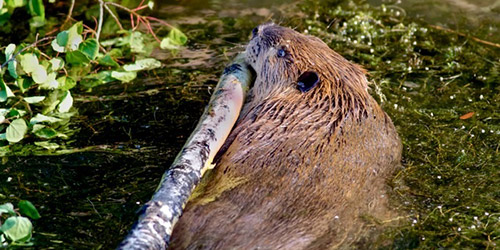
BUSY BEAVERS (GRADES K-5)
Learn how beavers build lodges, what they eat, and how they’ve adapted to both aquatic and terrestrial environments. Visit an active beaver lodge at our Nature Center and explore how beavers affect the South Platte Basin ecosystem.
Program time: 2 hours
Program fee: $200 per class (up to 27 students). Max 2 classes at one time.
Satisfies Colorado Academic Standards for Science 2.1 and 2.2.
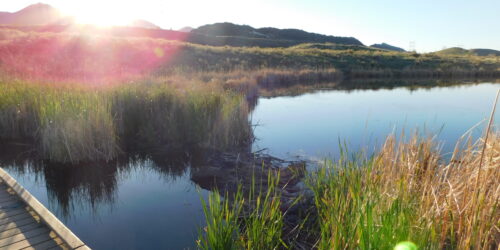
HEALTHY WATER, HEALTHY ECOSYSTEMS (GRADES 2-6)
Get your hands wet as we use nets to find aquatic animals and identify adaptations that help them survive. Explore our watershed model to find where the water goes and what we can do to support our aquatic friends.
Program time: 2 hours
Program fee: $200 per class (up to 27 students). Max 2 classes at one time.
Satisfies Colorado Academic Standards for Science 2.1 and 2.2.

BIRD BANDING: SCIENCE IN ACTION (GRADES K-12)
During April and May only, students stand feet away from wild birds at our nature center and observe bird biologists in action! Students learn about migration, nesting, and conservation and explore a riparian habitat. An in-class program on bird migration is required. Includes pre-trip class and fieldtrip.
Bird banding programs are full for 2024. Please check back in April for 2025 programs.
Program time: 1 hour in classroom before the trip, 3.5 hour field trip
Program fee: $450 per class (Max 30 participants including chaperones). Can only accommodate one class per day.
Satisfies Colorado Academic Standards for Science 2.1 and 2.3, Math 4.2, and Social Studies 2.2.